
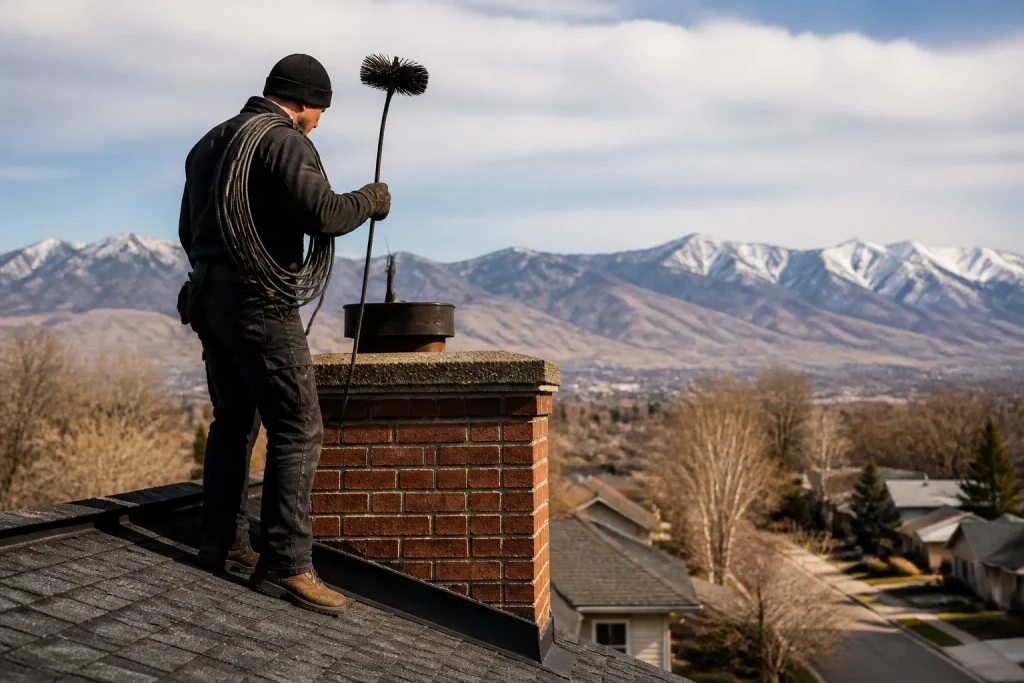
Chimney Sweep: Repair or Replace? How Midvale Homeowners Decide
Two chimney companies can look at the same flue and give you opposite advice. One always recommends replacement. The other always recommends a repair. Both are giving you the wrong answer, because the real question isn’t how old the chimney is. It’s whether the failure is isolated or systemic. A cracked crown on an otherwise sound chimney is a repair. A liner that’s failing while the firebox mortar crumbles is telling you something bigger. Knowing which one you’re looking at saves Midvale homeowners from both premature full replacements and band-aid fixes that fail within a season. If you’d rather not work through it alone, call (855) 523-1499.
Why “It’s Old” Is the Wrong Starting Point
Age matters less than location. Every chimney is a stack of separate parts, and each part fails on its own schedule. A masonry chimney in Midvale can have a twenty-year-old crown that’s given up, a liner that’s still sound, and flashing that’s been leaking quietly for years. Replacing the whole thing because the crown failed wastes money. Patching the crown when the liner is shot wastes a season before you’re back where you started.
What we look for first is the relationship between components. A crown cracks and lets water into the masonry above the firebox. That water freezes and thaws through our winters, pushing mortar joints apart and eventually reaching the liner. So a crown failure that’s been ignored long enough becomes a liner failure, which becomes a firebox problem. Understanding that chain is what separates a repair decision from a replacement decision.
Here’s the framework we use:
- Is the failure at one junction or across several components? One bad spot usually means repair. Three or four related failures usually mean the system is compromised.
- Is the failure structural or surface-level? Spalling brick and crumbling mortar joints are structural. A loose cap or torn flashing is not.
- Does the damage stop water or let it in? Water intrusion is the leading cause of chimney deterioration, so anything that restores a weathertight system buys you years.
- Will the fix actually change the outcome? A repair that just postpones a known failure is worth less than the repair that solves it.
That last question is where a lot of homeowners get talked into the wrong call, in both directions.
The Five Components and What Failure in Each One Means
Chimney problems cluster around five parts. Here’s what a failure in each one actually tells you about the rest of the system.
Liner
The liner is the inner wall that contains heat and combustion gases. A liner with isolated cracks, gaps at the joints, or a section that’s deteriorated can often be relined rather than rebuilt. A stainless insert system like DuraFlex lets us restore the flue inside the existing masonry, no demolition required. That’s the right call when the masonry shell is sound and the failure is contained to the liner itself.
Replacement territory starts when the liner failure is a symptom rather than the problem. If the liner is damaged because the masonry around it is spalling, or because the flue is undersized and overheating, or because moisture has been eating the chimney for years, relining alone puts a good liner inside a failing shell. That’s when the smarter investment is addressing the structure, not just the flue.
Crown
The crown is the concrete cap at the top that sheds water away from the chimney. Hairline cracks and surface wear can be handled with a flexible coating. Spalling, where the concrete is breaking into flakes and chunks, or a crown that’s pulling away from the flue, means the crown has lost its job. At that point a surface coating is cosmetic. Partial or full crown replacement restores the weather-shedding function the coating can’t.
Cap
The chimney cap sits on top of the flue and keeps rain, animals, and debris out. A cracked or missing cap is almost always a straightforward replacement. Damaged caps should be a red flag for a homeowner, though: they let water into the flue and the firebox, and a cap that’s been off for a couple of seasons usually means you’ll find moisture damage further down the system when we inspect. Replacing the cap alone may not be the whole answer.
Flashing
Flashing is the metal seal where the chimney meets the roof, and it’s where most leaks we find originate. Step flashing runs along the roof slope in steps, counter-flashing covers the top edge and integrates with the masonry. In Midvale’s freeze-thaw climate, the metal choice matters. A flashing repair that reseals existing metal can be enough when the flashing is intact but the sealant has failed. Full counter-flashing replacement is the right call when the metal is corroded, warped, or was installed wrong to begin with, because freeze-thaw cycling will find every gap and open it wider every season.
Firebox
The firebox takes direct heat, so its mortar joints are usually the first to show wear. Isolated joint deterioration can be repointed. A firebox with widespread crumbling, cracked panels, or gaps between the firebox and the surrounding masonry is a different matter, and it warrants a closer look at the whole assembly before deciding what to repair. This is where we bring out camera inspection, because what’s visible on the surface and what’s happening behind it don’t always match.
When Liner Repair Is the Right Call, and When It Isn’t
A damaged liner is repairable in a lot of cases. A flue that’s cracked, has open joints, or is undersized for the appliance can be relined with a stainless insert, and that’s a durable fix because it creates a continuous inner wall that doesn’t depend on the old masonry holding together. This is where HeatShield comes in as well. It’s a resurfacing system for liners and flue interiors, and it addresses certain damage profiles without a full liner installation. Not every sweep company offers it, which is why we’ve made it part of our toolkit. For some Midvale homeowners it’s the difference between a repair and a much larger project.
Liner replacement or broader structural work is the smarter call when:
- The liner damage tracks with masonry damage on the same run of the chimney.
- The firebox shows widespread deterioration, not just isolated joints.
- There’s evidence of a previous chimney fire that damaged both liner and surrounding structure.
- The flue was never correctly sized for the appliance in the first place, and relining would just install a correct liner inside an incorrect structure.
The way to tell the difference is with camera inspection. We run a camera down the flue and record what we find. You see the same footage we do. That’s how a repair-versus-replace decision gets made on evidence rather than on how old the chimney looks.
Crown and Mortar Joints: Coating vs. Replacement
Crown repairs come in two flavors, and the choice between them is one of the clearer calls in chimney work.
When a flexible crown coating is appropriate: the crown is structurally sound, has hairline or surface cracks, cracks follow mortar joints, or the crown is intact but shedding water poorly. A coating like CrownCoat seals those cracks and stays flexible through thermal movement, so it doesn’t crack back open the way rigid patching does. On a sound crown, that’s a durable fix.
When crown replacement is the right call: the crown is spalling, meaning it’s flaking and breaking into pieces. It’s separated from the flue. It was installed without the proper overhang or slope. Or the damage is deep enough that a coating would just trap water underneath and make things worse. In those cases we replace the crown with proper slope and overhang so it actually sheds water, which is what the whole part is for.
Mortar joints follow a similar logic. Repointing isolated joints is a solid repair. When the joints are failing across an entire face of the chimney, repointing becomes a stopgap because the underlying brick is also compromised, and that’s when you’re back to the systemic question.
How to Evaluate a Repair Recommendation
You don’t need to be a chimney professional to know whether a recommendation is worth trusting. You need to know what documentation should come with it. Before you approve a repair of any size, ask for the following.
- Camera footage. Any liner recommendation should come with photos or video showing the actual condition of the flue interior. If a contractor won’t show you the footage, ask why.
- Photos of the crown, cap, and flashing. Exterior components should be documented in the same way. You should see the crack or the spalling, not just hear about it.
- A written scope of work. This should name the materials and the method. “Reseal crown” is not a scope. “Apply flexible crown coating to sound concrete crown, prep and clean surface, ensure slope and overhang” is a scope, and it’s the standard we hold ourselves to.
- Materials named. Brands like Gelco, Olympia Chimney, and Famco are used by chimney professionals because they hold up. If a recommendation just says “sealant” or “cement,” ask what it actually is.
- A clear statement of what the repair accomplishes. A good recommendation tells you what problem it solves, how long it should last, and what would need to be true for replacement to become the right call instead.
And ask one more thing: whether any of the recommended work can safely wait. Sometimes the honest answer is that the crown can be repaired now and the flashing can wait until spring. That’s a useful answer, and a contractor who’ll give it to you is telling you they’re thinking about your budget, not their schedule.
When to Call a Pro
Some chimney checks are things a homeowner can do from the ground: look for a missing cap, cracked crown, or stains on the ceiling below the chimney. Anything above that level is a different matter. Climbing on a roof to inspect flashing, or working inside a flue, puts you in front of fall hazards and combustion-gas risks that aren’t worth taking on your own. High roofs and height work are exactly the jobs a trained technician should be doing, and the same is true of anything involving the liner or firebox interior. A proper chimney sweep and inspection tells you what’s actually there before you commit to either a repair or a replacement. If you’re scheduling a sweep or an inspection before you decide, we’ll walk you through what we find and explain why it matters, with the documentation to back it up.
Related services in Midvale: for the component you’ll likely be discussing after a sweep, see our chimney repair page, and if your firebox or damper is part of the picture, fireplace repair.
The Bottom Line
The repair-or-replace decision on a chimney comes down to whether the failure is isolated or systemic. Isolated liner damage on a sound shell is a reline. A spalling crown on sound concrete is a replacement of just the crown. But when failures chain together, when a crown leak has eaten into the liner and the firebox, repair is usually a postponement. Get the diagnosis right and you’ll avoid both the premature full replacement and the patch that fails by next winter. For full-system chimney work in Midvale, our technicians have up to 10 years of experience and the tools to show you exactly what’s happening inside your chimney. Chimney Sweep Midvale handles the whole system, into the cap and crown, with professional-grade materials. If you’re in Midvale and need help, Chimney Sweep Midvale offers free estimates. Call (855) 523-1499. We answer 24/7. Fast dispatch from 7am to 7pm, Sunday through Friday.
Frequently Asked Questions
It depends on whether the failure is isolated or spread across multiple components. A cracked crown on an otherwise sound chimney is a repair; damage in the liner, firebox, and masonry at the same time usually points toward replacement or a more significant rebuild. Camera inspection and photos of the crown, cap, and flashing should be the basis of the recommendation. Call (855) 523-1499 for a free estimate.
Yes, in many cases. A liner with isolated cracks, open joints, or sizing problems can be relined with a stainless insert like DuraFlex, or resurfaced with a product like HeatShield, without tearing out the masonry. Repair isn’t the right call when the liner damage is part of a broader pattern that includes masonry and firebox deterioration, because a new liner inside a failing shell doesn’t solve the problem. Call (855) 523-1499 for a free estimate.
A crown repair uses a flexible coating to seal hairline and surface cracks on a crown that’s still structurally sound. A crown replacement is the right call when the concrete is spalling, has separated from the flue, or was installed without proper slope and overhang, because a coating would trap water underneath instead of shedding it. Call (855) 523-1499 for a free estimate.
A repair is the right choice when it actually solves the problem and doesn’t defer it. If the recommendation comes with camera footage and photos showing the failure, and a written scope naming the materials and method, that’s a repair worth doing. If a contractor recommends replacement without showing you the evidence, get a second opinion first. Call (855) 523-1499 for a free estimate and we’ll show you what we find.
Written by the team at Chimney Sweep Midvale.
Need Chimney Cleaning Help?
Call Chimney Sweep Midvale - the local pro we connect you with is licensed and insured, here with fast help in Midvale.
(855) 523-1499