
Last updated November 24, 2026
 Sweep & inspection
 Caps & crowns
 Flue relining
 Masonry repair
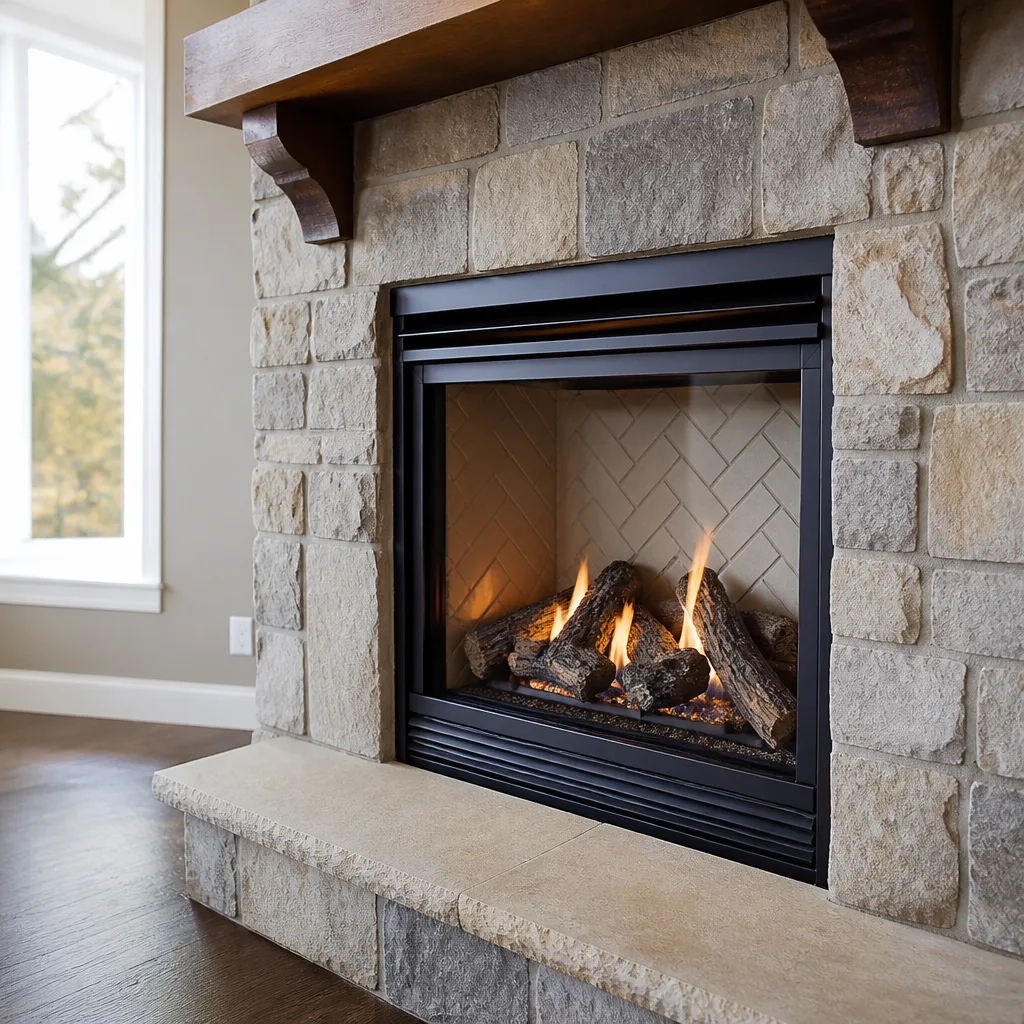 Gas fireplace service
Level 1 sweep and inspection to the NFPA 211 annual standard - flue, crown, cap, and flashing checked and photographed
Chimney sweep logs do not sweep chimneys. They loosen some creosote - which then falls where a brush and vacuum still have to collect it.
Chimney Cleaning Warning Signs: A Midvale Homeowner’s Reference Guide
A strong chimney odor in the middle of summer almost never means the chimney needs cleaning. In most Midvale homes it means the cap or damper has failed, and the negative pressure inside the house is pulling combustion gases back down through a flue that’s holding moisture. That single mismatch between symptom and cause is why so many homeowners book the wrong service, or wait too long, or spend money on a cleaning that does nothing. This guide maps each warning sign to its actual source in the chimney system, so you know whether you’re looking at routine maintenance or a reason to stop burning until someone inspects the flue.
Quick Answer
The warning signs that matter most in Midvale are the ones that point to a system failure rather than simple soot buildup: a cap that’s rusted or missing, mortar joints crumbling below the crown, white mineral staining on the firebox brick, and a fireplace that smokes or back-puffs when you light it. Any of these warrants a professional inspection before the next fire, not just a sweep. Odors in the off-season usually trace back to moisture, draft, or animals, not to creosote.
Styles & brands we work with
- Sweep & inspection
- Caps & crowns
- Flue relining
- Masonry repair
- Gas fireplace service
Table of Contents
- How to Decode Your Chimney’s Warning Signs
- Smell-Based Warning Signs: What Each Odor Tells You
- Visual Warning Signs Inside the Firebox
- Exterior Warning Signs: Cap, Crown, and Mortar
- Performance Warning Signs: Smoking, Slow Draft, Back-Puffing
- Routine Maintenance Triggers vs. Stop-Burning-Now Signs
- What Happens During a Chimney Inspection
- How to Describe a Problem When You Call
How to Decode Your Chimney’s Warning Signs
A chimney is a system, and every part of it fails in a way that shows up somewhere else. The crown sheds water onto the masonry below. The cap keeps rain and animals out of the flue. The liner contains the heat and gases so they don’t cook the surrounding structure. When one part fails, the symptom appears in a different place than the cause. That’s the whole reason warning signs get misread.
Here’s the first rule of decoding: a symptom tells you where to look, not what to fix. Smoke stains above the firebox don’t mean “clean the flue.” They usually mean the draft is being interrupted, and the flue could be perfectly clean. Stains on the ceiling near the chimney don’t mean “chimney leaking.” They mean water got in somewhere – often at the crown or the flashing where the chimney meets the roof – and traveled.
The second rule: age of the symptom matters less than direction of change. A little smoke staining that’s been there since you bought the house in Midvale is often cosmetic. New staining this season is a system that’s telling you something shifted. Same with mortar. Chalky in one joint on an old chimney versus a widening crack across several courses are two very different conversations.
Third: match the service to the cause. In our experience, homeowners often call for a sweep when the actual job is a cap-and-crown repair, a liner evaluation, or a fireplace restoration. Using this guide, you’ll be able to tell those apart and ask for the right work. Full-system chimney care – sweep, inspect, repair, and protect in one place – is what we do, and knowing which piece you need saves time.
Smell-Based Warning Signs: What Each Odor Tells You
Odor is the most misunderstood chimney warning sign. Most chimney smells in Midvale are not cleaning problems. They’re moisture problems, draft problems, or animals. Here’s how to sort them.
Acrid, smoky, or pungent smell
This is the closest thing to a true cleaning signal. A sharp, sour creosote smell, especially in warm weather, usually means there’s a heavy creosote load in the flue that’s off-gassing. It can also come from a closed damper holding in old soot. The right response is a sweep and inspection, and if it’s July in Midvale, you don’t have to wait until fall.
Earthy, damp, “basement” smell
This is moisture. A chimney that smells damp and earthy is pulling humid air in from outside through a failed cap, missing rain cover, or a cracked crown, and that air is picking up soot and organic growth along the way. The fix is usually at the top of the chimney, not with a brush. A proper cap – the kind that keeps water out but vents correctly – and a crown repair if the crown is failing.
Sulfuric, rotten-egg smell
This one is more specific. A sulfuric or sewer-like smell coming from a chimney is often combustion gas being pulled back into the home, and it’s a reason to stop burning and call for an inspection. Draft reversal, a blocked flue, or a collapsed liner can all push gases the wrong way. Don’t run a fire to “burn it off.”
Animal smell
Nesting birds, squirrels, and raccoons are common in Midvale chimneys, especially when a cap has come loose. The smell is usually musty and localized to the flue, and you might hear scratching. Don’t light a fire to scare them out; get an inspection to clear the flue and add a proper cap. Olympia Chimney makes caps that hold up well in our climate.
Visual Warning Signs Inside the Firebox
Open the firebox door with a flashlight and you can read a lot about the state of the system. Look for these in particular.
- Spalling brick. When the face of a firebrick flakes or pops off, it’s usually heat damage or water damage. Spalling firebox brick is a safety issue, not a cosmetic one, because the brick is what stands between a fire and the structure.
- Efflorescence. That white, powdery crust on brick is salt pushed to the surface by water moving through the masonry. In Midvale, efflorescence usually points to water entering higher up – at the crown or at the flashing – and it’s an early warning before the brick starts to fail.
- Smoke staining patterns. Fresh, dark staining above the firebox or on the face of the fireplace is a draft signal. It often means the flue is undersized for the firebox, the damper isn’t opening fully, or the chimney isn’t tall enough for how the house is pressurized.
- Crumbling mortar in the firebox joints. Soft, sandy mortar in the firebox means the joints have been cooked out, and the firebox needs restoration before it’s used again.
- Cracks in the firebox panels. Prefab fireboxes have metal or refractory panels that crack with age; a cracked panel is a replacement trigger, and a fire should not be burned until it’s inspected.
Firebox restoration is one of our core services, and it’s the kind of job where we use HeatShield and Famco products rather than patching with generic mortar. HeatShield resurfacing in particular can repair a deteriorated flue without a full liner replacement, which most sweep companies can’t offer. For fireplace work, a proper repair page like fireplace repair is a good place to see the full scope.
Exterior Warning Signs: Cap, Crown, and Mortar
Standing at the base of the chimney outside is the fastest five-minute inspection a homeowner can do. Here’s a dictionary of what you’re looking at.
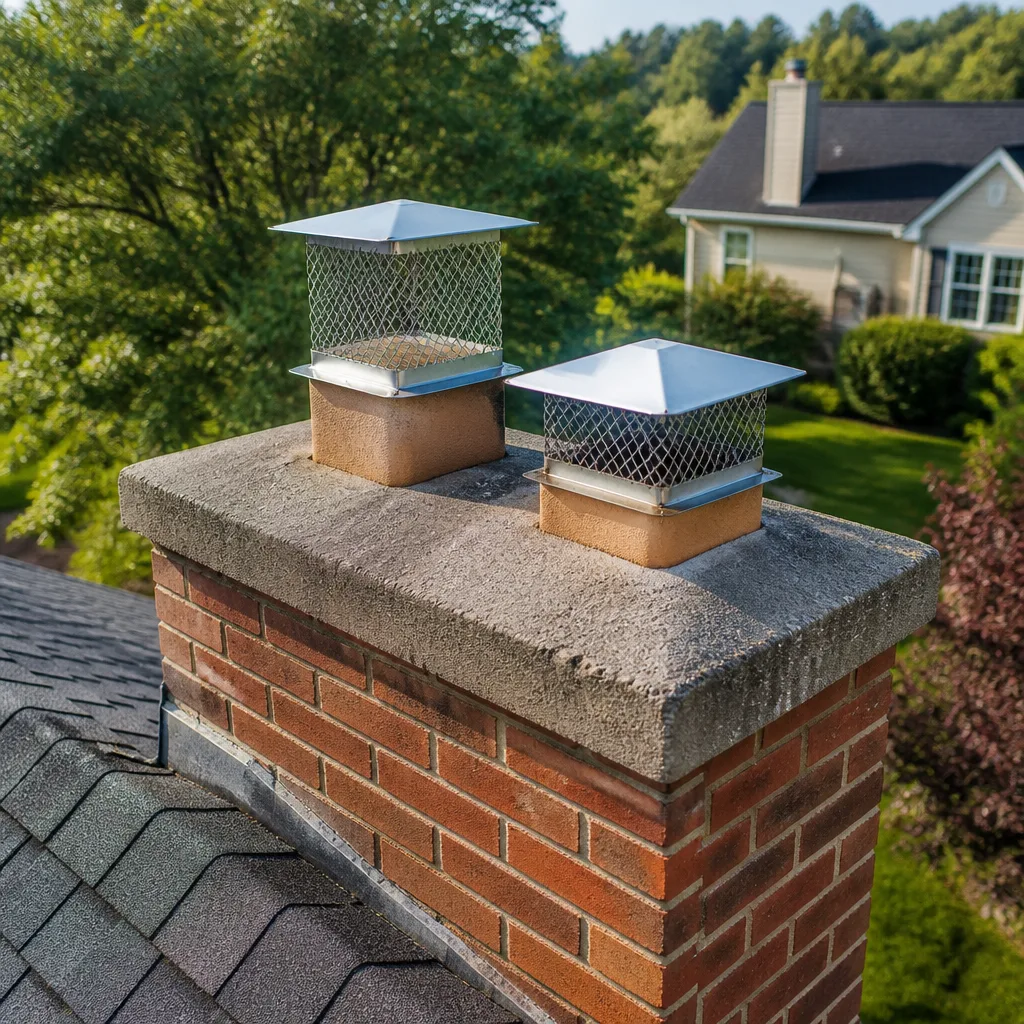
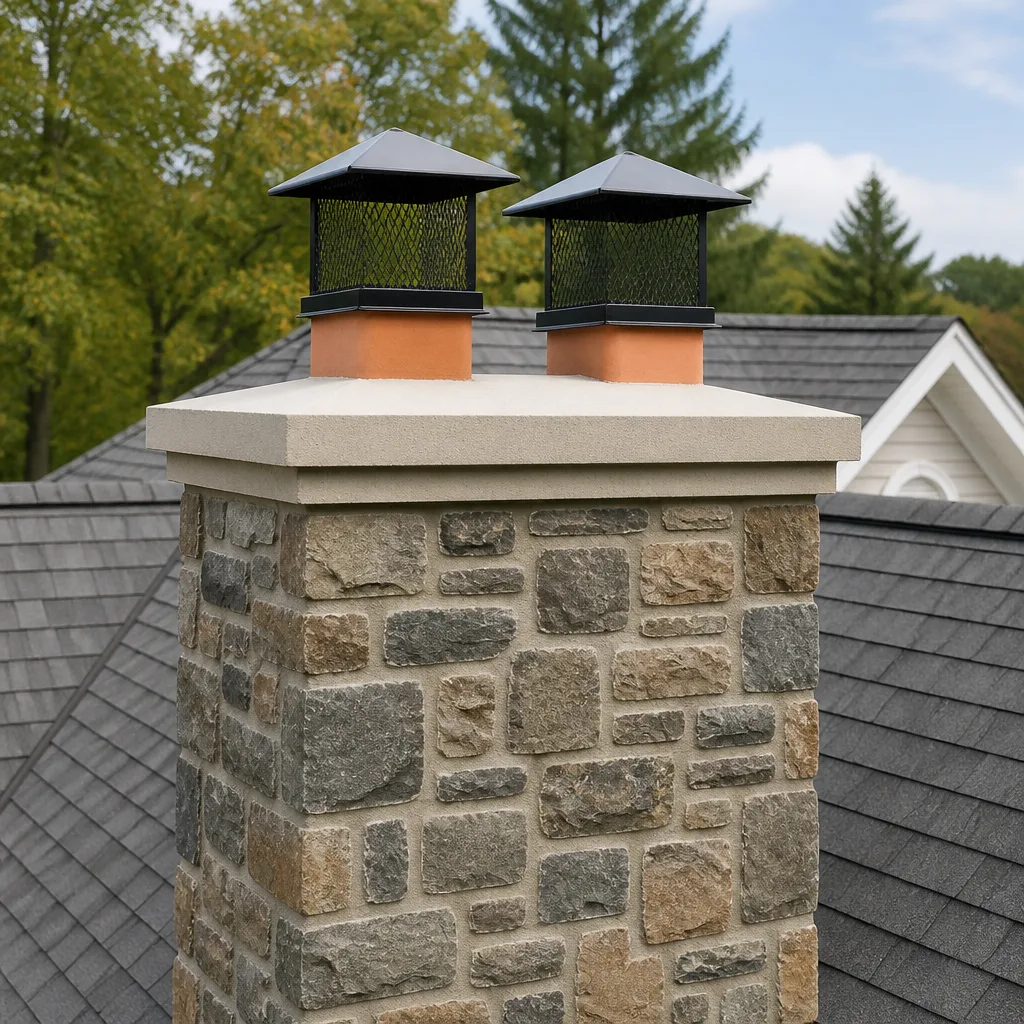
- Rusty, bent, or missing cap. A cap that’s rusted through, torn, or gone means rain, snow, and animals all have direct access to the flue. This is the leading cause of water intrusion in the system and the source of most “why does my chimney smell in summer” questions. A properly designed cap – we install Olympia Chimney and Copperfield caps – lets smoke out but keeps weather and wildlife in check.
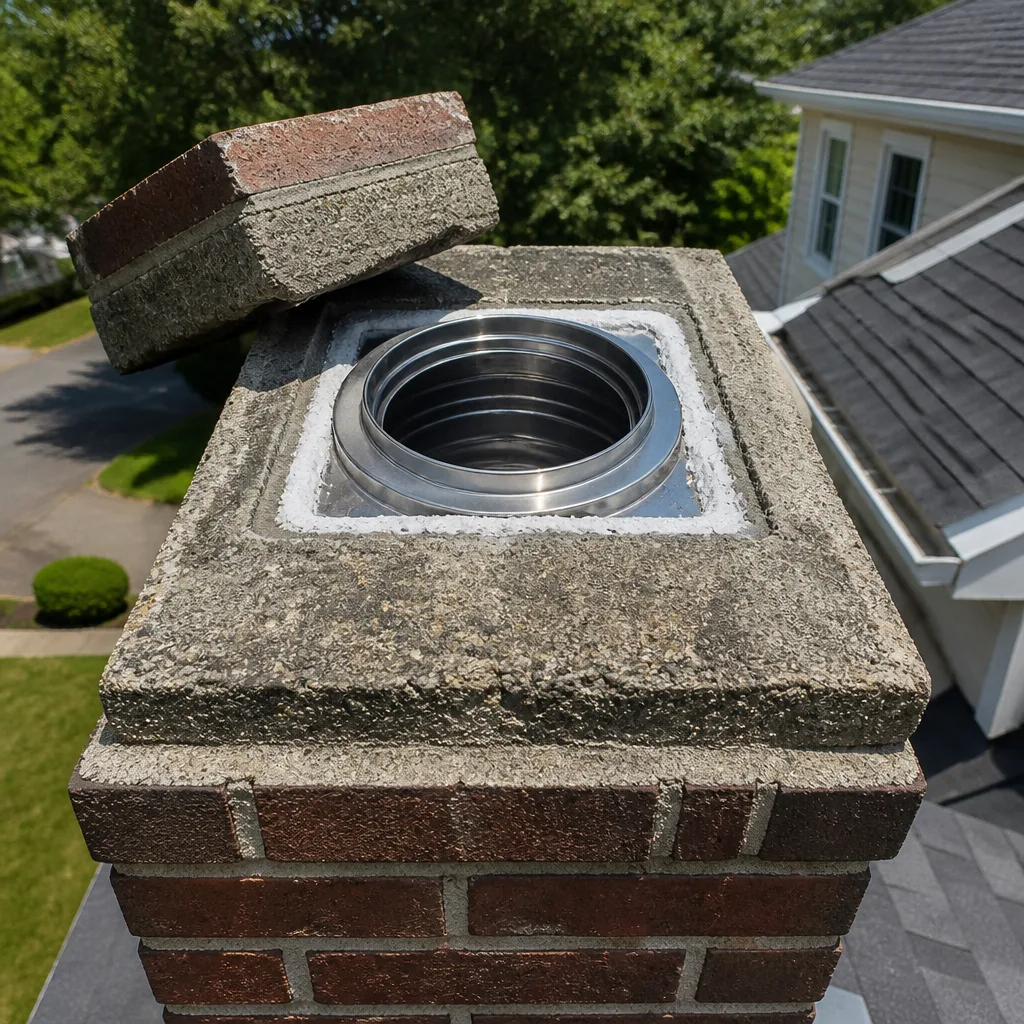
- Cracked or flaking crown. The crown is the concrete cap on top of the masonry. Cracks let water run straight down into the brick and freeze-thaw cycles in a Midvale winter widen them. A failing crown is the upstream cause of many downstream problems: efflorescence inside, spalling brick in the firebox, and staining on interior walls.
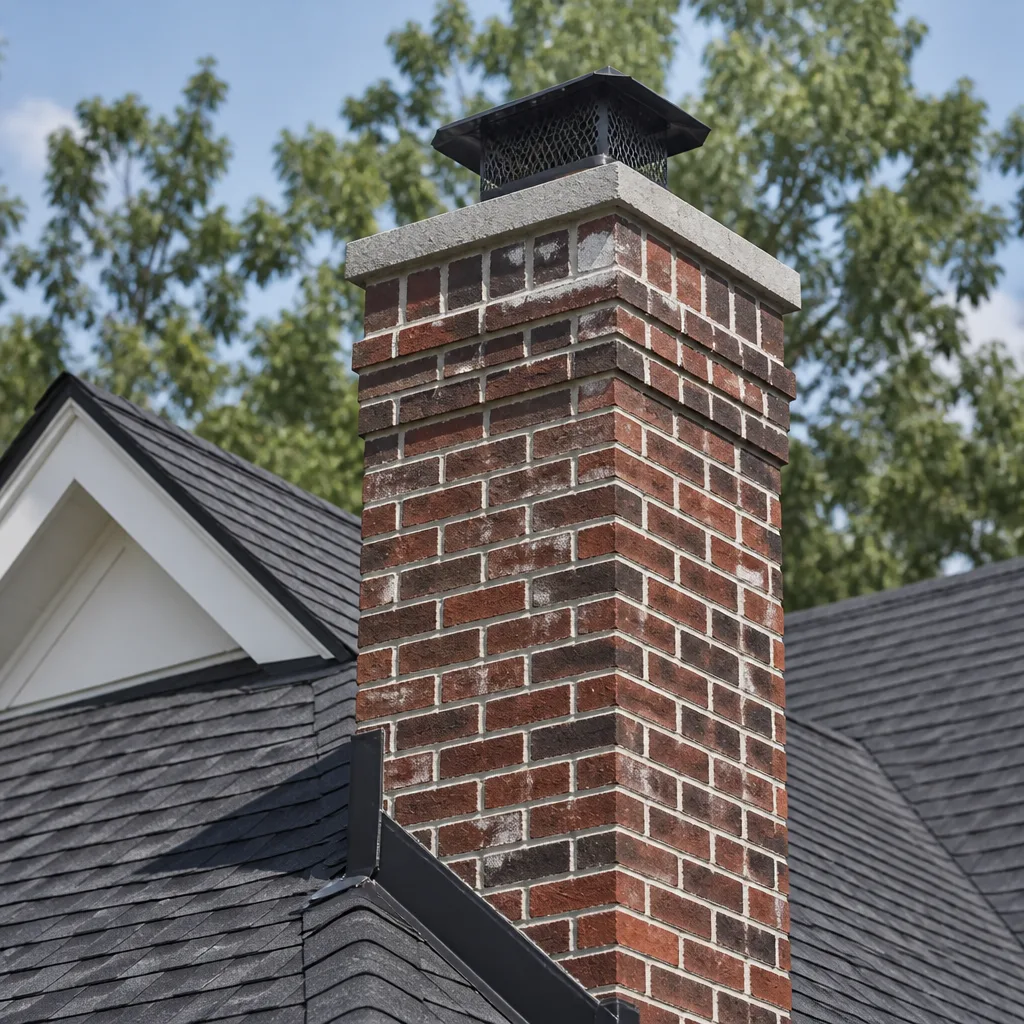
- Crumbling mortar joints. In our experience, mortar joints on Midvale chimneys take real wear from the freeze-thaw swings between seasons. Chalky, recessed, or sandy joints need repointing before the brick takes on the job.
- Staining below the crown. A dark or white stain running down the masonry just below the crown usually means water is getting in at the crown seam or through failed flashing. Dark streaks can also be soot washing out the top of the flue.
- Spalling brick on the exterior. When brick faces pop off the outside of the chimney, the masonry is saturated and freezing. Repointing alone won’t fix it; it needs a waterproofing approach after the source is corrected.
- Tilted chimney or visible lean. Rare but serious, and a reason to stop using the fireplace until it’s inspected.
Cap-and-crown service is a category we specialize in because it’s the most preventive thing a homeowner can do. The full scope of exterior repairs is covered on our chimney repair page.
Performance Warning Signs: Smoking, Slow Draft, Back-Puffing
Performance problems are the easiest to notice and the hardest to describe on the phone. Here’s how to translate what you’re seeing.
Smoking firebox
“The fireplace smokes” can mean several different things, and the fix is different for each. Get specific: does it smoke on startup only, does it smoke continuously, or does it smoke when a door or exhaust fan is running? Startup smoke is often a cold-flue problem. Continuous smoke is usually a draft or flue-sizing issue. Smoke only when something else is running in the house is often about the home’s air balance.
Slow draft
If the fire lights slowly, smolders, or the smoke doesn’t pull up the flue, the draft is weak. Common causes include a flue that’s undersized for the firebox, a partially blocked flue from soot or a bird nest, and a chimney that’s exterior-mounted and slow to warm up. In Midvale, short chimneys and cold starts are the most common reasons. A DuraFlex flexible liner is often the answer when the flue needs to be relined to a correct size without masonry demolition.
Back-puffing or spillage
A fire that puffs smoke into the room in bursts, or that spills when you open the door, is a sign the pressure in the chimney is fighting the pressure in the house. It’s a reason to stop using the fireplace until it’s inspected, especially if the smell is sulfuric. Combustion gases coming into the living space are the definition of a carbon monoxide risk, and that’s a professional conversation, not a homeowner fix.
One note: don’t diagnose performance from the outside. A clean-looking flue from a distance tells you nothing about draft or sizing. An inspection is the only reliable answer, and the scope of ours is on our chimney sweep page.
Routine Maintenance Triggers vs. Stop-Burning-Now Signs
This is the most important distinction in the guide. Some warning signs mean “book a sweep before next season.” Others mean “don’t light another fire until someone inspects.” Here they are, separated.
Routine maintenance triggers (book a sweep and inspection)
- It’s been more than a year since the chimney was last swept or inspected.
- A new-to-you home in Midvale with an unknown chimney history.
- Light smoke staining above the firebox that hasn’t gotten worse.
- Efflorescence without spalling or interior staining.
- A little soot on the firebox face from normal use.
- Odors in the off-season, if there’s no sulfuric smell and no birds.
Stop-burning-now signs (call before next use)
- Sulfuric or sewer-like smell in the house or at the firebox.
- Back-puffing or smoke spilling into the room when you open the door.
- Spalling or crumbling brick inside the firebox.
- A visible crack through the firebox panels in a prefab fireplace.
- A missing or severely damaged chimney cap combined with interior water staining.
- Any visible crack through a masonry chimney that runs across multiple courses.
If you’re not sure which bucket a sign belongs to, err on the side of caution. Book a sweep and inspection. If everything is clean and sound, the inspection is a baseline for next year, and you’ll have photo documentation. Nothing gets recommended without camera evidence you can see for yourself.
What Happens During a Chimney Inspection
An inspection is the diagnostic step behind every warning sign, and it’s the one thing we recommend before any repair work. Here’s what a real one looks like with us.
- Exterior walk-around. We look at the cap, crown, mortar, flashing, and masonry before we go inside. Most of the water-intrusion and structural findings start here.
- Firebox and damper check. We inspect the firebox brick or prefab panels, the damper operation, the smoke shelf, and the smoke chamber above.
- Camera inspection of the flue. A camera run up the flue shows the actual condition of the liner – cracks, gaps, debris, sizing issues. This is where the flue-to-cap connection shows up.
- Draft and condition testing. We note whether the flue is drafting correctly for the firebox size, and we check the cap and top seal for water-entry points.
- Photo report. You get photos of what we find, with explanations of why each finding matters and what, if anything, needs to be done. If a problem can safely wait, we say so.
The inspection is where our professional-grade materials come in. When a repair is needed, we work with brands like HeatShield for liner resurfacing, DuraFlex for flexible liner installation, and Gelco and Famco for the smaller components that fail first. Built to last, not patched to pass. Our technicians have up to 10 years of experience with these systems. For the full picture of our inspection service, see our Chimney Sweep Midvale page.
How to Describe a Problem When You Call
The more precisely you can describe the warning sign, the faster we can route the right service. Use these prompts to get specific.
- What you smell. “Sharp and smoky” is a different call than “damp and earthy,” which is different from “sulfuric.” Say which.
- Where you see staining. On the firebox brick? The ceiling near the chimney? The masonry below the crown? Interior walls? Location drives the diagnosis.
- When it happens. Startup only, all the time, or when a bathroom fan or dryer is running in the house.
- What’s changed. “It’s been like this since we bought the house” is information. “It started two weeks ago” is different information.
- What the chimney looks like on the roof. Missing cap? Cracked crown? Crumbled mortar? A phone photo taken from the yard helps.
- What kind of fire you’re burning. Wood, gas, or gas log set. Gas units have their own warning signs, and the service path differs.
- Last service date. If you know the last sweep or inspection, say so. If you don’t, that’s fine, that’s what the inspection is for.
When you call, you’ll get a free estimate with the work itemized and a written scope before anything is booked. We explain what we find and why it matters. If the honest answer is “call us back in the spring,” we’ll tell you that.
Common Mistakes to Avoid
- Burning a fire to clear the smell. If the smell is sulfuric, a fire makes it worse. If the smell is from moisture, a fire can trap the moisture in the masonry and crack it. Stop, inspect, then burn.
- Treating every odor as a cleaning problem. In Midvale, most off-season chimney odors trace to a cap or draft issue, not creosote. Booking a sweep for an odor that’s actually a failed cap wastes the sweep and leaves the source in place.
- Ignoring the cap because the chimney “looks fine” from the ground. A missing or rusted cap is easy to miss from an angle. Look straight up from the base of the chimney, not from the street.
- Waiting for fall to call. Spring and early summer are better times to find and fix a warning sign. A Midvale winter freeze on saturated masonry does more damage than the original leak.
- Patching a crown with generic mortar. A crown patch has to shed water and hold through freeze-thaw. A quick patch that fails in one winter is more expensive than starting with the right material.
- Assuming a clean flue means the liner is sound. A clean flue can still have a cracked or undersized liner. Camera inspection is the only way to know.
- Skipping the inspection because the fireplace works. A fireplace can “work” while the liner is compromised. The warning sign is often on the inside, not in the performance.
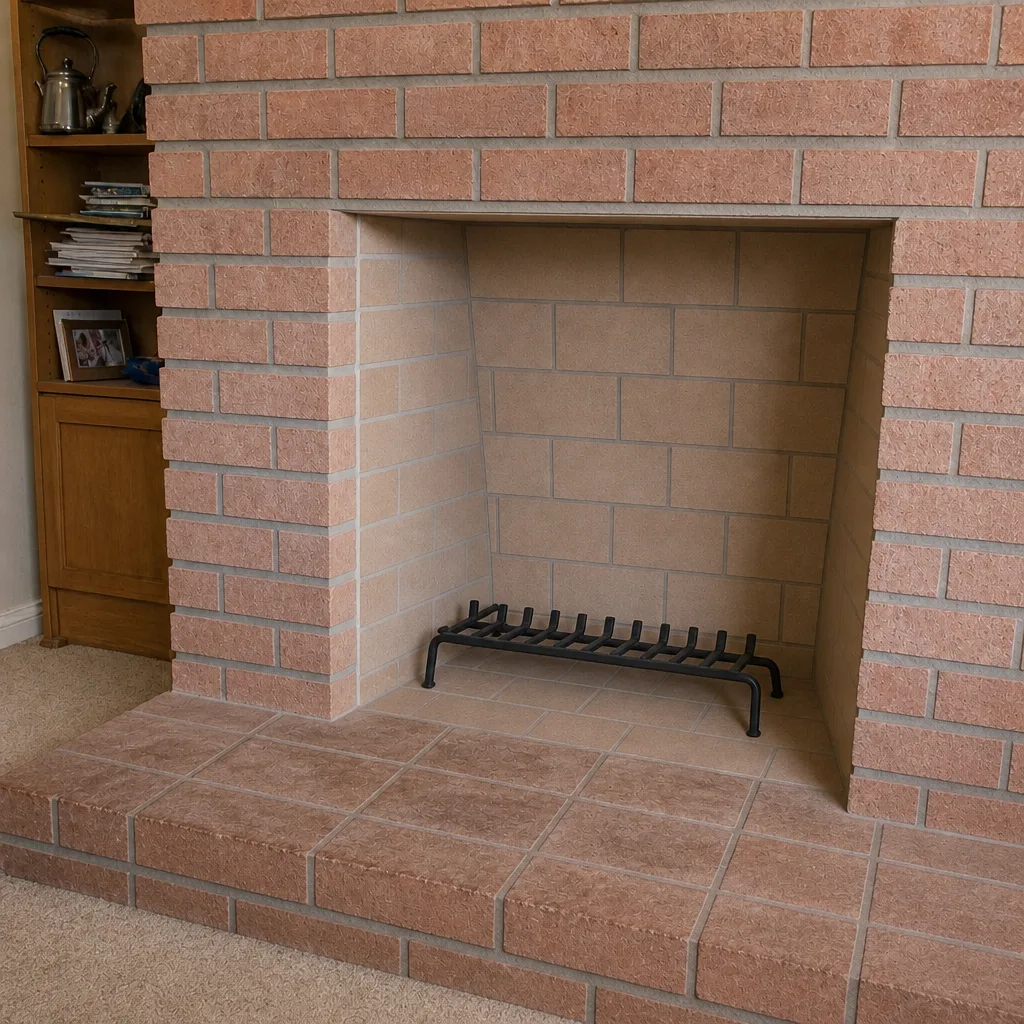
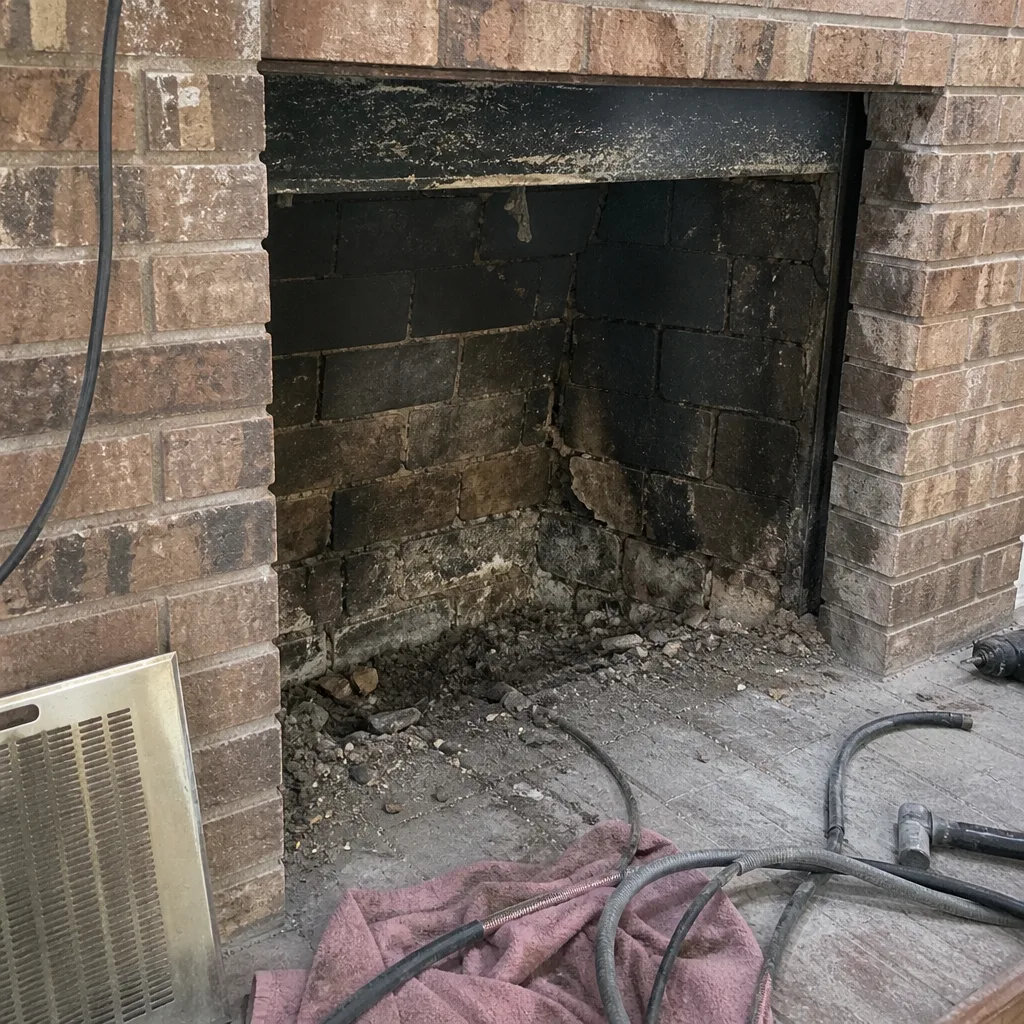
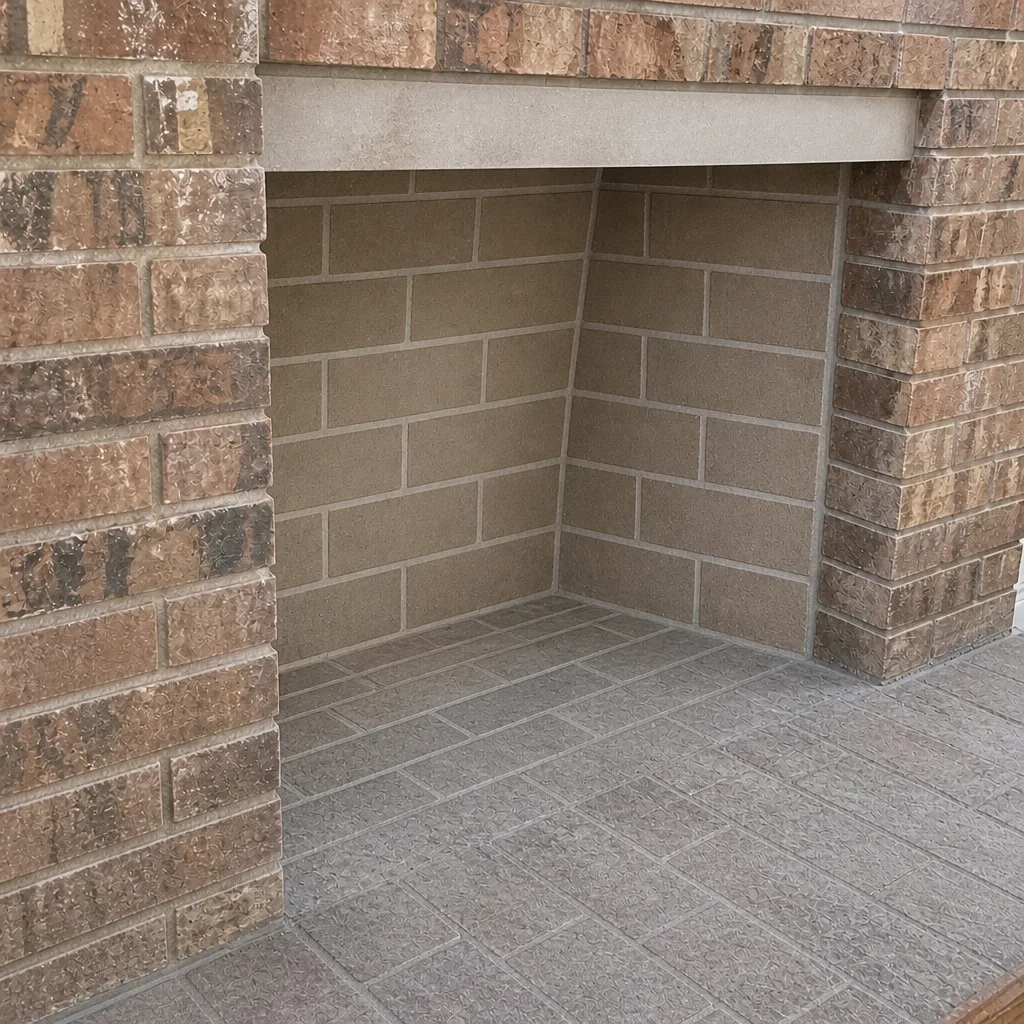
See the difference
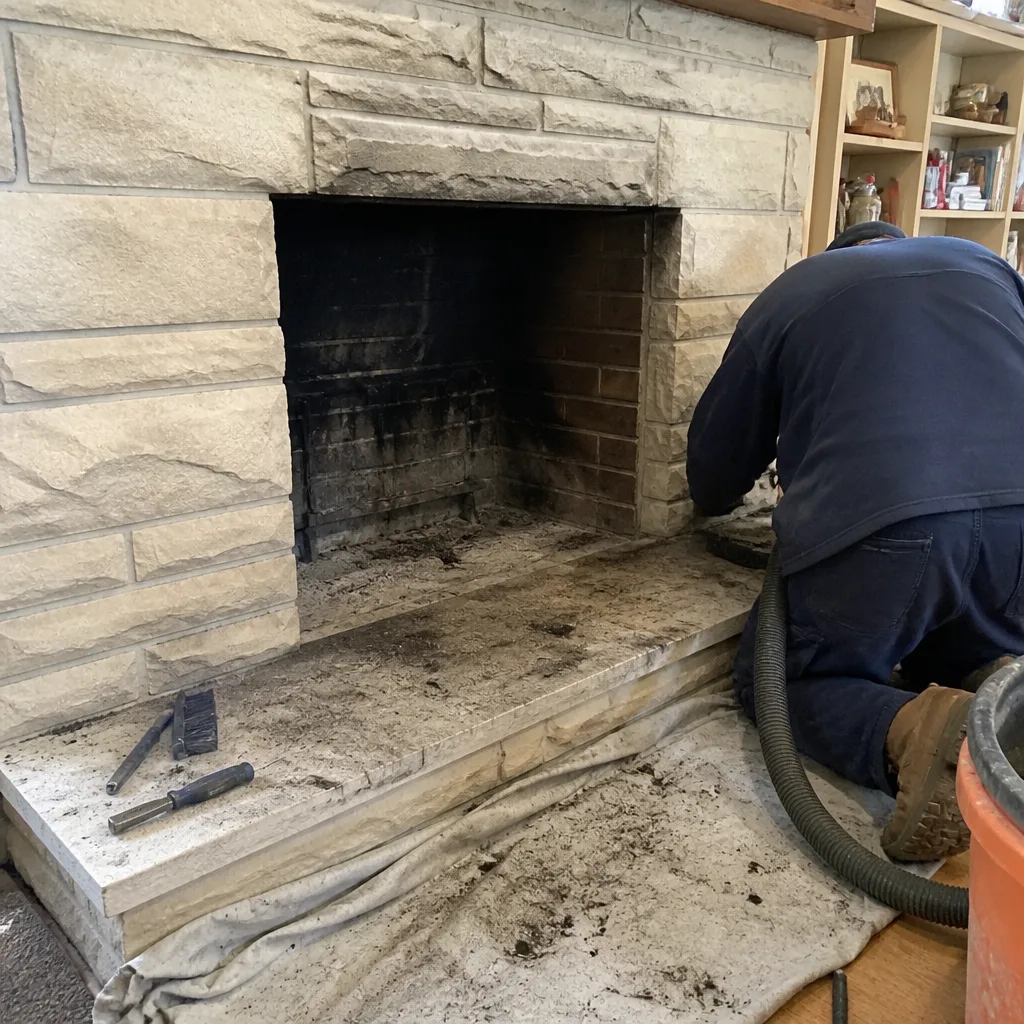 Before
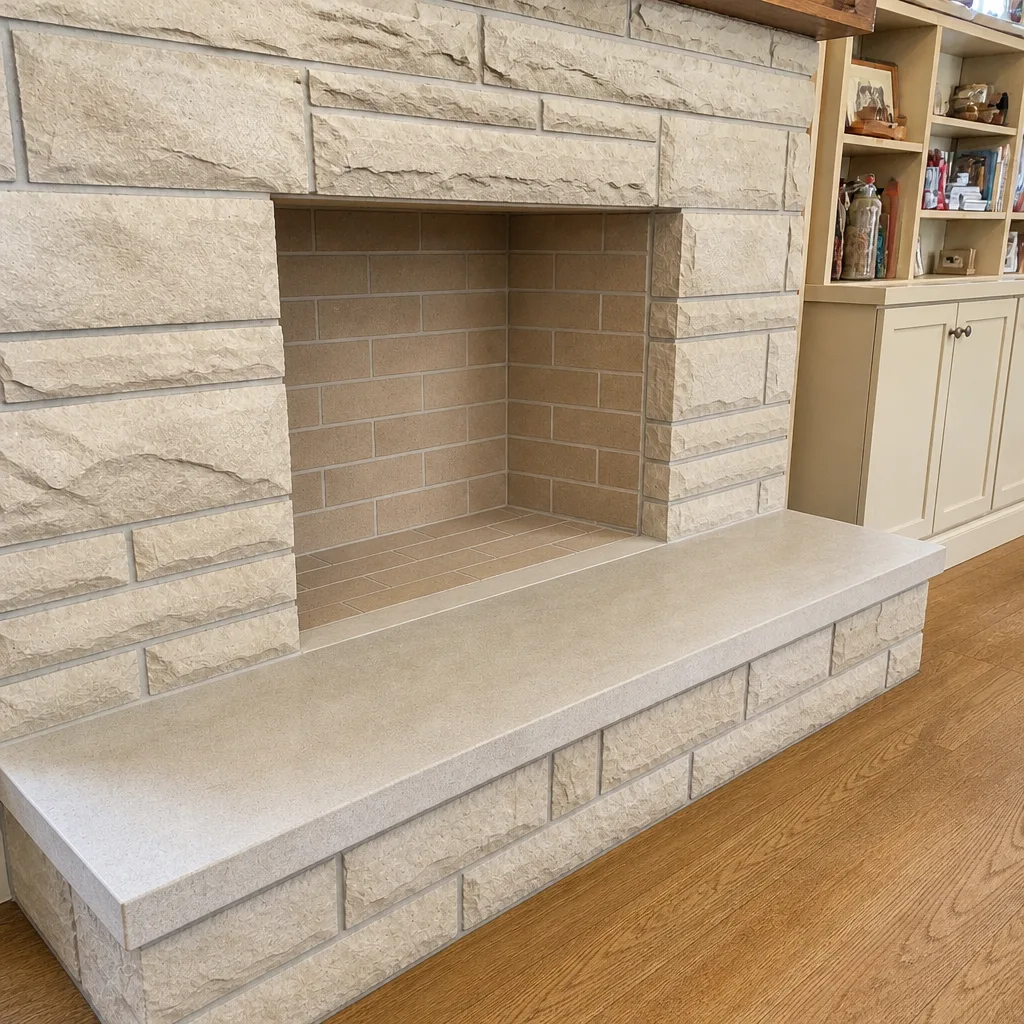 After
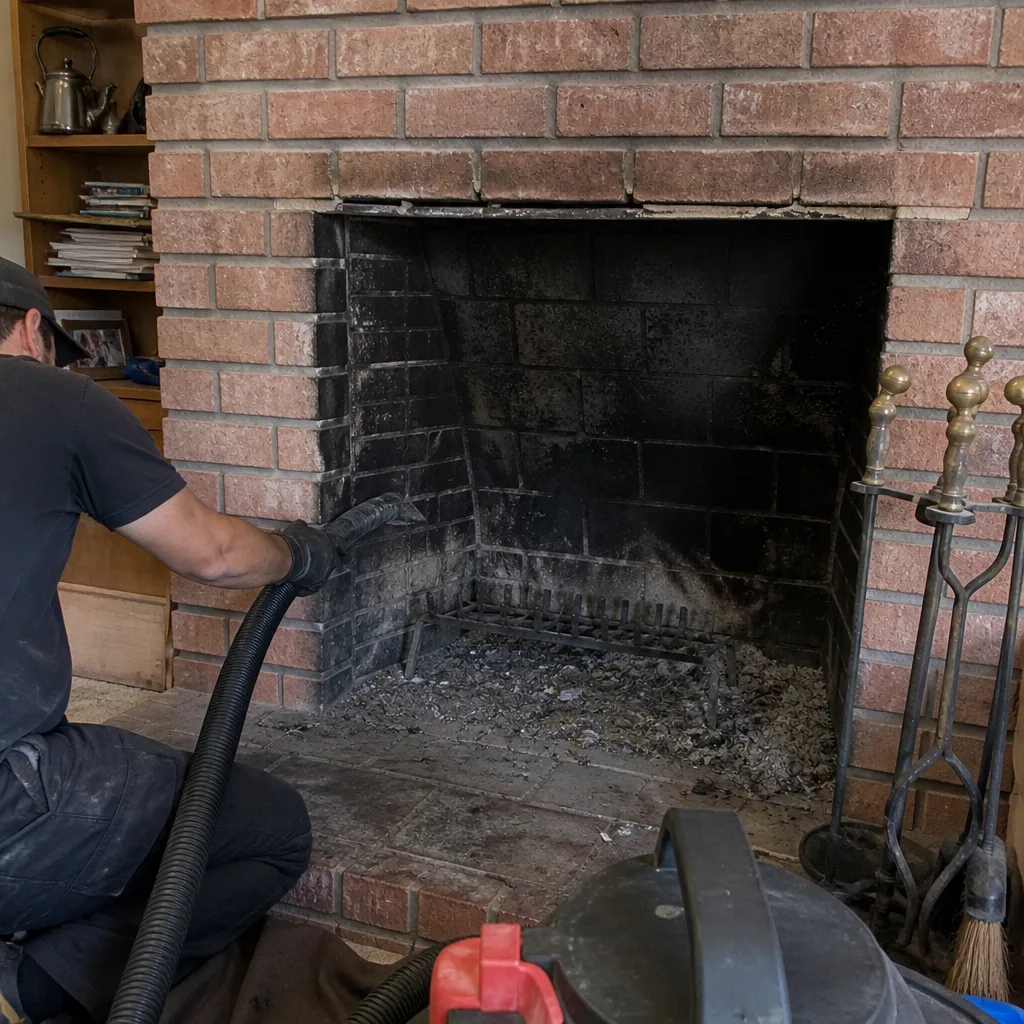 Before
 After
 Before
 After
When to Call a Professional
Call us if you smell sulfur or see smoke spilling into the room, if brick is spalling or mortar is crumbling, if there’s water staining on the ceilings or walls near the chimney, or if it’s been longer than a year since the last sweep and inspection. Any of those is a reason to schedule. Don’t climb onto the roof for a look; a chimney that’s failing at the crown is exactly the kind of surface that gives way. Chimney Sweep Midvale offers free estimates in Midvale – call (855) 523-1499. We answer 24/7. Fast dispatch from 7am to 7pm, Sunday through Friday. The estimate is free, the price is set per job by the written estimate, and if the work can wait, we’ll tell you so.
Frequently Asked Questions
Smoke spilling or back-puffing into the room, or a sulfuric smell at the firebox, is the most serious warning sign because it points to combustion gases entering the living space. Stop using the fireplace and call for an inspection before the next fire. Call (855) 523-1499 for an exact quote – estimates are free.
A summer chimney smell in Midvale almost always traces to moisture or draft, not a dirty flue. A failed cap lets humid air in, and negative pressure pulls it back through the chimney picking up soot on the way. The fix is at the top of the chimney, not with a sweep. Call (855) 523-1499 for a free estimate.
You can clean a firebox and a hearth, but a full flue sweep and inspection is a professional job. The reason is simple: the risks of a chimney are on the roof, inside the flue, and in the firebox, and none of those are places to diagnose without training. The local pro we connect you with is licensed and insured as their state requires. Call (855) 523-1499 to book a free estimate.
A chimney should be inspected once a year and swept whenever the flue has enough creosote or debris to need it. Most Midvale wood-burning households land on an annual sweep and inspection. The inspection tells you when the next one is due. Call (855) 523-1499 to book.
Efflorescence is salt pushed to the brick surface by water moving through the masonry, and it typically means water is entering higher up – at the crown or flashing. It’s an early warning, not a failure yet, and it’s the right time to fix the source. Call (855) 523-1499 for a free estimate.
Not always. A damaged or deteriorated flue can sometimes be repaired with HeatShield resurfacing, which restores the liner without a full replacement. A cracked or incorrectly sized flue that can’t be resurfaced is a DuraFlex flexible liner candidate. The inspection decides. Call (855) 523-1499 to book a free estimate.
Skipping one season isn’t automatically a disaster, but you lose the diagnostic check that catches problems early. A failed cap, a cracked crown, or a spalling firebox found in the spring costs less to fix than one found after a winter of water damage. If you’ve skipped, book the inspection before the next burn. Call (855) 523-1499.
A rusted cap is a real problem. Once it rusts through, water and animals have direct access to the flue, and the moisture drives most of the downstream damage we see in Midvale. Cap replacement is one of the most preventive jobs in the trade. Call (855) 523-1499 for a free estimate.
The Bottom Line
Most chimney warning signs mean something other than what they look like. Smells point to moisture or draft more often than soot. Staining below the crown points to a failing cap or crown, not a dirty flue. Smoke in the room points to a draft or liner problem, not a fire that needs more kindling. Read each sign by where it leads, not by how it looks, and you’ll book the right service. The one rule that beats all the others: when the sign is sulfuric smell, spalling firebox brick, or smoke spilling into the room, stop burning and call for an inspection. Everything else can be scheduled. Nothing gets recommended without camera evidence you can see, and we’ll tell you plainly when work can wait.
Call (855) 523-1499 for a free estimate. We answer 24/7. Fast dispatch from 7am to 7pm, Sunday through Friday. Covered from flue to cap: sweep, inspection, fireplace repair, chimney repair, and cap-and-crown in one place, with professional-grade materials like HeatShield, DuraFlex, Olympia Chimney, Copperfield, and Famco. Your flue, liner, crown, and cap – covered.
Written by the team at Chimney Sweep Midvale.